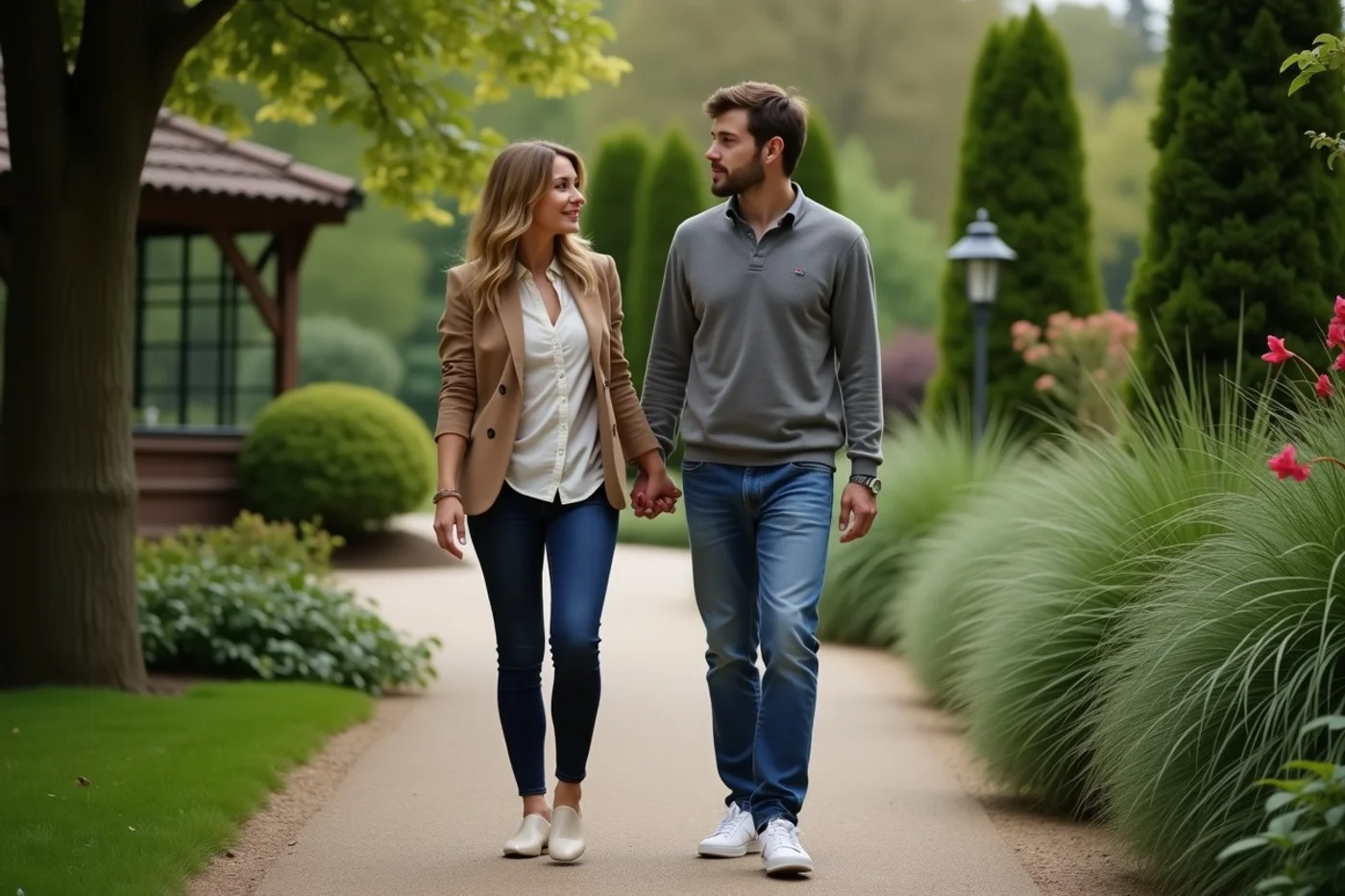
Liège rewards dates that leave room for conversation, a little French, and an easy journey home. English-speaking singles can meet people through recurring cultural, university-linked, international, or volunteer settings, then choose a central area that fits the plan. For example, a daytime visit to La Boverie followed by a walk through Parc de la Boverie gives two people a shared subject without requiring flawless French. Mention your language comfort early, agree on a precise landmark, and check how each person will get home.
Liège’s Francophone Social Context Shapes How Connections Begin
Dating in Liège usually begins in a French-speaking social setting, even when the other person understands some English. English can carry a conversation with many people, but treating French as the default courtesy sets a warmer tone. You do not need polished French to show that respect.
Say where you stand early and without apology: “My French is still limited, but I’d be happy to speak English or try a mix.” A hypothetical first conversation might move from simple French introductions into English for the details. That is not a failure of connection; it is often the most natural arrangement.
Mixed-language conversation takes a little patience. Let a person finish a thought, ask for a word when it matters, and do not turn every exchange into a language lesson. Interest, attention, and follow-through count far more than flawless grammar.
Recurring Local Activities Create Better Openings Than Cold Approaches
Familiarity gives a conversation somewhere to go. A brief chat with a stranger may be pleasant, but a group that meets again lets both people see whether the interest holds after the first exchange. In Liège, seek settings built around a shared activity, not only a single social night.
Cultural associations and classes provide a subject to discuss before dating enters the picture; a language, cooking, dance, or arts course also gives people a reason to return. University-linked communities suit students, researchers, and people who enjoy talks or student-led activities, while international groups remove some of the pressure of arriving alone. Volunteering tends to produce the slowest but often most grounded connections because people work alongside one another over time.
For example, someone who meets a fellow art enthusiast at La Boverie or a cultural programme at La Cité Miroir might suggest continuing the conversation at the next exhibition or discussion. That invitation has a natural basis and leaves room for either person to decline comfortably. Seasonal festivals and recurring cultural events work best when you join an activity or volunteer team, where the same faces are likely to reappear, rather than treating one crowded evening as a dating opportunity.
Match the Date Area to the Mood and Travel Plan
For a date in Liège, choose the area before choosing the exact place. The historic centre offers the greatest concentration of cafés, bars, and cultural stops within a short walk, which suits a first meeting that might end after one drink or extend into dinner. Around Le Carré, that density also brings a livelier, noisier evening atmosphere; it fits an energetic night out, not a conversation that needs quiet.
Outremeuse has a more neighbourhood-oriented feel across the Meuse. It works well for a slower meal or a walk with a defined destination, while Parc de la Boverie and the La Boverie museum give a daytime date some structure without filling every minute with talk. A hypothetical pair meeting after work could choose the centre for flexibility; two people planning a weekend afternoon might prefer the river and park setting.
The Guillemins surroundings suit dates where one person arrives or leaves by train, since the area reduces the need to cross the city at either end of the evening. It is less useful when you want several nearby options after the first stop. For a performance-led plan, central cultural venues such as La Cité Miroir or the Opéra Royal de Wallonie-Liège place the evening close to the historic centre’s onward options. Match the area to the tone you want and the distance each person will cover afterward.
Confirm the Language, Meeting Point, and Journey Home Beforehand
Send a short confirmation on the day: which language you will use most, the exact meeting point, and the time. “Shall we speak English? My French is conversational but slower after a long day” is candid without turning language into a hurdle. For the location, name a landmark and a side or entrance where relevant; “at the steps of Montagne de Bueren” is less open to interpretation than “near the centre.”
Check the venue’s current opening hours before leaving, especially when the plan includes a museum, cultural performance, or a second stop. A date at La Cité Miroir or the Opéra Royal de Wallonie-Liège needs a confirmed start and finish time, not an assumption based on an old listing. If plans change, send the revised meeting point in one complete message.
Transport deserves the same attention. Establish each person’s last workable train, bus, or other route home, and mention early if either of you is coming from outside Liège. A date need not end early because of that information; it simply sets a sensible window for the evening and avoids a rushed conversation at the end.
Choose one recurring Liège activity where you are willing to return more than once, then suggest a short first meeting in an area that suits both travel routes. Before confirming, send one message covering the conversation language, the exact meeting point, and the time each person needs to leave.
References
- Opéra Royal de Wallonie-Liège — official information — Opéra Royal de Wallonie-Liège
- La Cité Miroir — official information — La Cité Miroir
- La Boverie — official information — La Boverie
- Ville de Liège — official information — Ville de Liège