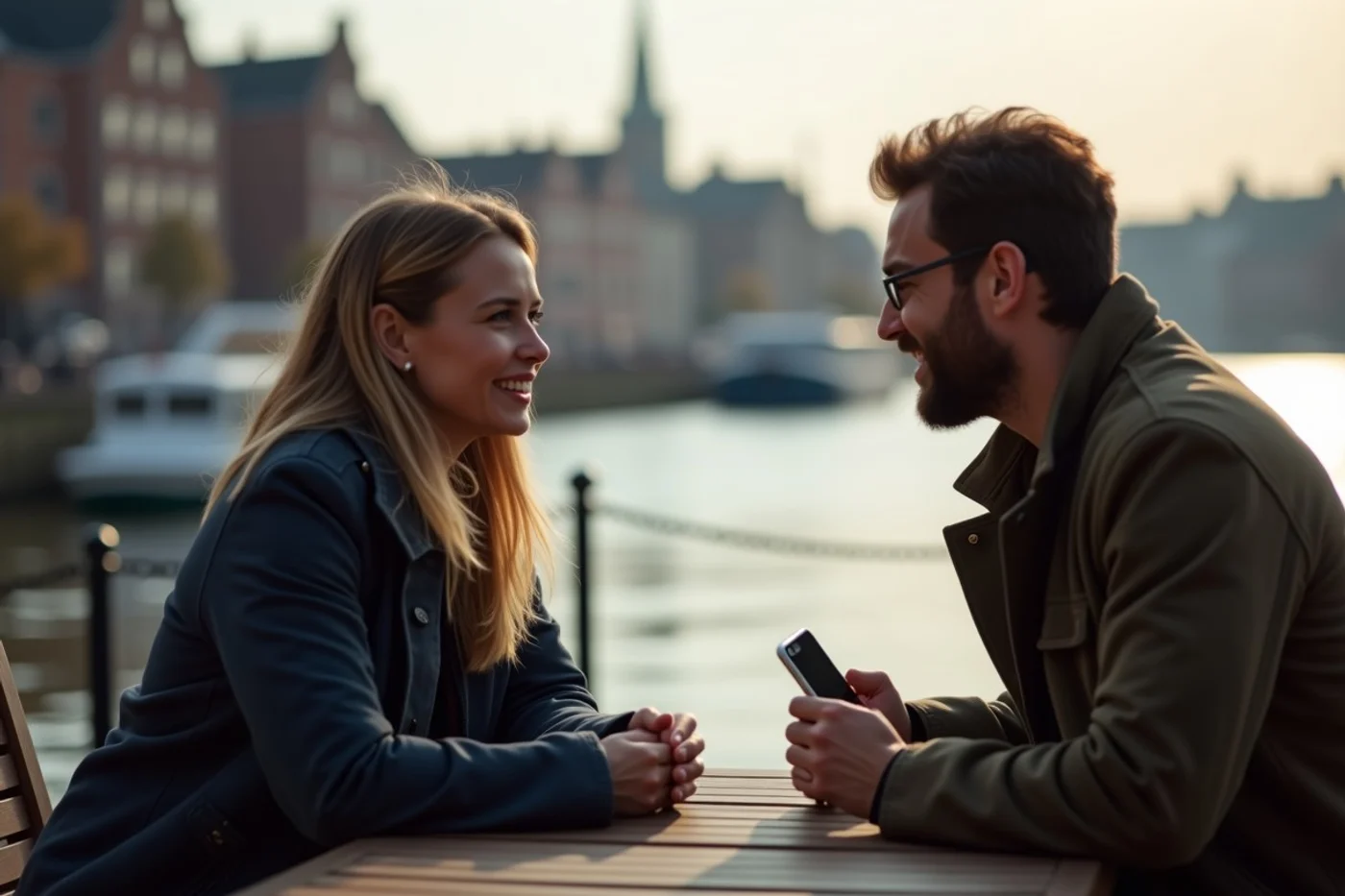
In Antwerp, the setting shapes how naturally conversation develops. Creative groups, professional gatherings, neighborhood activities, student circles, and nightlife suit different intentions, while the Historic Centre, Eilandje, Het Zuid, and Zurenborg offer different ways to plan. English is widely useful in international encounters, and asking about Dutch or another shared language shows consideration. Online matches benefit from a specific public meeting plan and a format that leaves room to talk.
Finding the Antwerp setting that matches your intention
Antwerp offers different kinds of first contact, and the setting shapes the conversation. Creative workshops, exhibitions, and cultural gatherings suit people who prefer an activity to carry the opening exchange. A visit to MAS in Eilandje, for example, gives two people something specific to discuss while revealing whether their interests overlap.
Professional gatherings often lead to focused conversations about work, projects, or shared fields. They suit people looking to connect through an existing interest, although romantic intent is not always clear at first. Student circles tend to feel more informal and social, with introductions spreading through friends, societies, or recurring activities; they work best when both people have a natural reason to be there.
Neighborhood activities in places such as Zurenborg or around Het Zuid create repeated encounters and slower familiarity, especially through classes, community events, or regular cultural interests. Nightlife in central Antwerp brings quick social contact and a lively atmosphere, while noise and group dynamics leave less room for careful conversation.
Match the setting to the connection you want to build: use an interest-based event for shared curiosity, a professional context for common work, a student or neighborhood circle for repeated contact, and nightlife for spontaneous introductions. Notice whether the environment lets you hear each other and talk without performing for a crowd.
Using Antwerp neighborhoods to reduce planning friction
Base the meeting area on both starting points rather than a district’s reputation. Antwerp’s Historic Centre suits two people who want a central meeting point and the option of a short walk. Eilandje suits a cultural or waterfront plan; check how each person will get there and how late nearby options remain available.
Match the area to the date’s intended length. For a brief first meeting, use a location near a recognisable transport connection, with an easy exit after one drink or coffee. An extended evening needs more flexibility: allow for a second stop, walking time, and opening hours that do not force an abrupt ending. Het Zuid and Zurenborg suit people who live nearby or already know the route; distance matters more than a fashionable address.
Send the practical details before leaving: the exact meeting point, expected arrival time, and whether you plan to walk. A simple message such as “Shall we meet near the museum entrance at 18:30 and decide afterward whether to continue?” gives both people a defined first step without locking them into a long evening.
Making multilingual conversation feel natural
Language shapes the mood of a date in Antwerp, without becoming a test of fluency. Start with the language that feels most natural, then ask what gives both people the best conversation. Try: “Would you prefer English or Dutch?” or “I understand some Dutch, but I express myself better in English. Is that comfortable for you?”
A mixed conversation works well when both people agree on the arrangement. For example, one person speaks Dutch while the other answers in English, English covers complex topics and Dutch simple phrases, or French becomes part of the exchange when both people are comfortable with it. Say, “Please correct me if I miss something,” or “Let’s switch to English for a moment.” A request to change language communicates comfort, not criticism of the other person’s choice.
Watch the conversation itself after the switch. If replies become shorter, jokes are repeatedly missed, or one person spends more time translating than connecting, check in: “Is this pace working for you?” Keep the language that lets both people contribute fully, and return to the arrangement later if the conversation changes.
Turning an online connection into a real Antwerp plan
- 1. Move from general interest to a direct invitation. After a few positive exchanges, write: “I’ve enjoyed talking with you. Would you like to meet in Antwerp this week?” This gives the other person a clear choice without creating pressure.
- 2. Offer two workable options. Name a day, a time, and a public meeting area, then provide a second option if possible: “Tuesday at 18:30 near the central station, or Thursday at 19:00?” Specific choices prevent an open-ended planning loop.
- 3. Confirm the exact meeting point before the day. A neighborhood or landmark alone may be too broad, so identify the entrance, corner, or other visible reference point. Include how each of you will recognise the location and allow time for transport delays.
- 4. Keep contact details proportionate to the plan. Confirm the number or messaging account you will use for last-minute changes, but do not treat a request for extra personal information as part of arranging the date. The essential exchange is contact, time, and place.
- 5. Rework the plan promptly when availability changes. Send the update as soon as you know: “I can’t make Thursday at 19:00. I’m free Saturday at 15:00 or Monday at 18:30—would either suit you?” A concrete alternative shows continued interest; no replacement option leaves the invitation open without pretending it is settled.
Date formats that leave room for genuine conversation
A walk with a planned stop suits a first meeting when you want movement without complicated logistics. In Antwerp, a route through the Historic Centre gives you a café or public square as a natural pause. Stadspark provides a greener setting for conversation; keep the walk short enough that either person can leave comfortably.
A compact cultural visit gives the date a shared subject. MAS in Eilandje works well when both people enjoy exhibitions, architecture, or city views, with time afterward for a drink or discussion. Agree on one manageable visit, not an entire afternoon, so the conversation remains central and the plan does not feel like an obligation.
For a quieter meeting, use a café in an area that suits both journeys and leave enough time to talk without scheduling several stops. A low-pressure activity also helps when conversation feels less natural: a brief walk in Rivierenhof or a relaxed wander through Het Zuid gives you something to notice together. Keep the format simple, with one main activity and an obvious point at which to finish.
Reading the room before deciding whether to continue
An enjoyable first meeting usually shows through shared effort: both people ask questions, add topics, respond with attention, and suggest what happens next. Someone who proposes another stop, checks whether you have time, or keeps the conversation moving signals interest in extending the meeting. Treat these as openings for discussion, not automatic consent. You can say, “I’m enjoying this. Would you like to continue for a little while?”
Polite closure often sounds different. Signs include mentioning the next obligation, gathering belongings, giving shorter replies, or saying it is time to leave. None of these signs proves disinterest; the relevant signal is whether the person responds positively when you offer a choice. “Shall we finish here, or would you prefer another ten minutes?” gives both of you a clear exit.
Do not read too much into quick or delayed messages after the meeting, physical contact, or the number of drinks consumed. A warm goodbye does not promise a second date, and alcohol blurs ordinary social cues. Keep the immediate decision simple: propose one optional extension, listen to the answer, and leave graciously when the answer is no, uncertain, or noncommittal.
Writing a follow-up that makes your intention clear
A follow-up after meeting in Antwerp should refer to something specific from the conversation. Send it when you are ready to continue the connection, without turning the message into a review of the evening. For example: “I enjoyed our conversation about architecture, especially the part about Antwerp’s old centre. I’d like to see you again.” That shows interest without implying more than you know.
When the meeting felt mutual, add one concrete suggestion: “Would you like to meet next Wednesday for a walk in Stadspark?” A day, activity, and approximate timing give the other person something to accept, adjust, or decline. Keep the plan separate from any pressure to define the relationship. A simple message also works after a cultural date: “I had a good time at MAS. Would you like to continue the conversation over coffee next week?” Before naming a specific attraction or schedule, check its current opening arrangements.
A vague reply does not require repeated persuasion. Respond once with warmth if the person says they are busy without suggesting another time: “No problem—send me a message if you would like to meet another time.” A direct no deserves a brief, respectful answer such as “Thanks for letting me know. I enjoyed meeting you and wish you well.” Then leave the exchange there. Silence after a clear invitation is also information; avoid sending a series of follow-ups to force an answer.
Before confirming an Antwerp date, match the place and format to the connection you have built: use a convenient meeting area, name a precise time and public point, and suggest an activity with a natural stopping point. Afterward, send a message that mentions one detail you enjoyed and proposes another meeting when your interest is genuine. A direct, considerate follow-up gives both people enough information to respond honestly.
Where the factual details come from
- City of Antwerp — City of Antwerp
- MAS — MAS