
Ghent is not just a student city or a place for sightseeing; its recurring cultural, hobby, professional, and neighbourhood activities create several routes to meeting people. For dating in Ghent, choose a setting where conversation can continue over more than one encounter, then suggest a short meeting in a central or familiar area. Korenmarkt, Graslei and Korenlei, Patershol, and Citadelpark each suit different date lengths and atmospheres. English is workable in many international settings, while a quick language check keeps local and international conversations comfortable.
The kinds of Ghent communities that make repeated contact easier

Ghent dating does not have to begin with a direct romantic approach. Repeated-contact settings give you time to recognise people, share an activity, and notice whether conversation develops naturally. Cultural groups, language exchanges, classes, and education-linked communities suit newcomers who want a broad social circle. Hobby activities such as music, sport, crafts, or walking groups work well when a shared interest matters more than polished small talk.
Professional networks and neighbourhood events serve a different purpose. They can suit locally based adults who already know which part of Ghent they spend time in, while international meet-ups or community activities can help residents who are still building local connections. Check the organiser’s audience and the frequency of meetings before committing: a recurring group offers more continuity than a one-off gathering.
Cultural settings also provide an easy conversation subject. A museum visit or related group activity connected with STAM, Ghent’s city museum, or the Museum of Fine Arts Ghent can appeal to people who prefer discussing a shared subject. For a quieter route into the local social scene, look for activities linked to neighbourhood life and public programming in Ghent. Choose one setting that genuinely interests you, attend more than once when possible, and let familiarity develop before turning a connection into a date.
Planning a meeting around Ghent’s compact but varied routes
Ghent’s centre is compact, but a convenient date still depends on where each person is coming from and how many changes the journey requires. Compare the full route from both neighbourhoods, including the final walk from a stop or station. A central point such as Korenmarkt suits people arriving from different directions and leaves several options nearby if the date continues.
Match the meeting area to the length of the plan. For a short first meeting, choose a recognisable central point and keep the walking distance modest. Graslei and Korenlei work well for a walk-led plan, while Patershol suits a brief stroll followed by food or a drink nearby. These areas keep the route easy to shorten if either person has limited time.
Longer daytime dates can use a quieter setting such as Citadelpark, provided both routes remain straightforward. STAM or the Museum of Fine Arts Ghent can anchor a shared cultural visit, but check opening details before relying on a museum as the main plan. Send the meeting point, expected walking time, and any transport change in advance so the other person can assess the route without guesswork.
Settling on English, Dutch, or a flexible mix
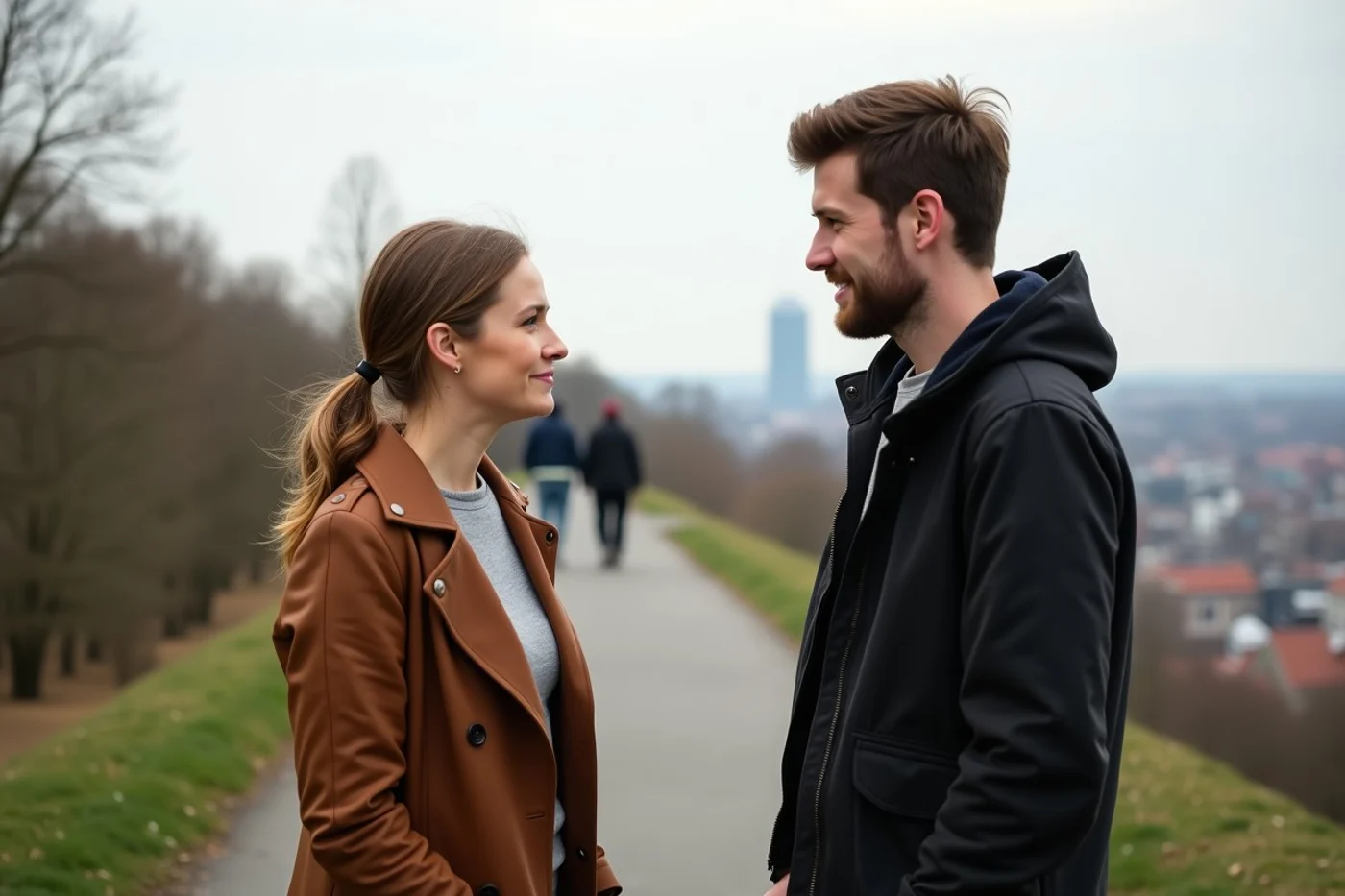
Language preference is worth clarifying early in Ghent, especially when one person is more comfortable in Dutch and the other communicates mainly in English. A simple message such as “Which language feels best for you—English, Dutch, or a mix?” keeps the choice neutral and avoids turning fluency into a test.
A mixed conversation can work well when both people stay patient: use the language that lets the more complex ideas come through, then switch briefly when a phrase feels easier in the other language. Short explanations are kinder than repeated corrections. If a word is unclear, ask what it means and continue; do not make every mistake a topic.
For a first conversation, agree on the main language and let small changes happen naturally. Someone in Ghent’s international circles may prefer English, while a locally rooted contact may feel more at ease in Dutch. Either preference is ordinary. The important signal is willingness to keep the exchange comfortable for both people.
From a promising conversation to a low-pressure invitation
- Name the next step plainly once the conversation has had enough time to develop. A message such as “I’ve enjoyed talking with you. Would you like to meet for coffee near Korenmarkt this week?” signals romantic interest without turning the invitation into a major declaration.
- Offer one concrete format and one or two possible times. “I’m free Wednesday after work or Saturday afternoon” gives the other person something easy to answer. Keep the first plan short enough to feel approachable: coffee, a brief walk, or an hour at a museum such as STAM.
- Leave room for a genuine no. Add wording such as “No worries if you’re not interested” when the context calls for extra clarity. That removes pressure without weakening the invitation, and it prevents vague replies from being treated as agreement.
- Confirm the arrangement after they respond positively. Restate the day, approximate time, meeting place, and expected length in one message. For example: “Saturday at 14:00 near Korenmarkt, for about an hour?” This catches misunderstandings before either person travels.
- If the reply stays vague, ask once for a definite alternative: “Would another day suit you?” Continued uncertainty is information. Let the conversation end politely when no clear availability follows; a promising exchange does not create an obligation to arrange a date.
The kinds of Ghent communities that make repeated contact easier Recurring activities usually offer a stronger opening than a one-off attempt to meet someone. Cultural groups, language exchanges, education-linked communities, hobby classes, sports activities, professional networks, and neighbourhood events give people a reason to see one another again. Hobby or cultural settings suit people who want conversation to grow around a shared interest. Professional networks call for more discretion, since a romantic invitation can affect an ongoing working relationship. Education-linked groups often suit students and young professionals, while neighbourhood events help residents meet people who already spend time nearby. Choose one setting that matches the kind of connection you want. A class or recurring group provides several natural conversations. A public event creates more variety but less continuity. Check the group’s current language, schedule, and participation details before attending; Ghent’s municipal and cultural information is available in English for people planning local activities. Planning a meeting around Ghent’s compact but varied routes Ghent’s centre offers convenient reference points, but convenience still depends on where each person is coming from and how long the date should last. Korenmarkt works well as a simple first meeting point before a nearby drink or walk. Graslei and Korenlei suit a conversation-led stroll along the water. Patershol offers a compact old-town setting when you want the option of continuing with food or a drink. Citadelpark is better for a daytime walk away from the busiest central streets. Match the route to the date’s length. A short first meeting should use one easy-to-find point and one nearby activity. A longer plan can include a walk followed by a meal, but confirm that both people are comfortable extending it. When travel involves several connections or a long walk, ask which area works best before naming a venue or time. Settling on English, Dutch, or a flexible mix Language preference should be part of the plan, not a test of someone’s fluency. A message such as “Would you prefer English, Dutch, or a mix?” gives both people room to answer plainly. Someone might understand one language well but feel more relaxed speaking another. Switching briefly can work when both people find it natural; constant correction or turning the date into a language lesson can interrupt the connection. International groups often use English, while locally rooted activities may include Dutch or a mixture of languages. Learn a few Dutch phrases if you enjoy doing so, but do not present them as a requirement for meeting people in Ghent. Confirm the preferred language before the date and keep the conversation in the language that lets both people participate fully. From a promising conversation to a low-pressure invitation 1. Continue the conversation once or twice in the original setting or online. Refer to a shared subject so the invitation follows naturally from the interaction. 2. Name one simple plan in Ghent: “I’ve enjoyed talking with you. Would you like to meet for a coffee and a short walk around Graslei and Korenlei this week?” 3. Offer two possible times when you know your availability. A specific suggestion is easier to answer than an open request to meet sometime. 4. Confirm the meeting point, approximate duration, and language. For a shorter first meeting, Korenmarkt provides a straightforward landmark; for a cultural plan, check current visitor information for STAM or the Museum of Fine Arts Ghent before proposing it. 5. Leave the answer uncomplicated. A positive reply can lead to a confirmed plan; hesitation or a decline needs no argument. The next action is to choose one recurring Ghent activity, attend it consistently, and invite one person to a short meeting when the conversation has earned that step.
Sources for this guide
- Museum of Fine Arts Ghent — official information — Museum of Fine Arts Ghent
- City of Ghent — official information — City of Ghent
- STAM — official information — STAM
- Visit Gent — official information — Visit Gent