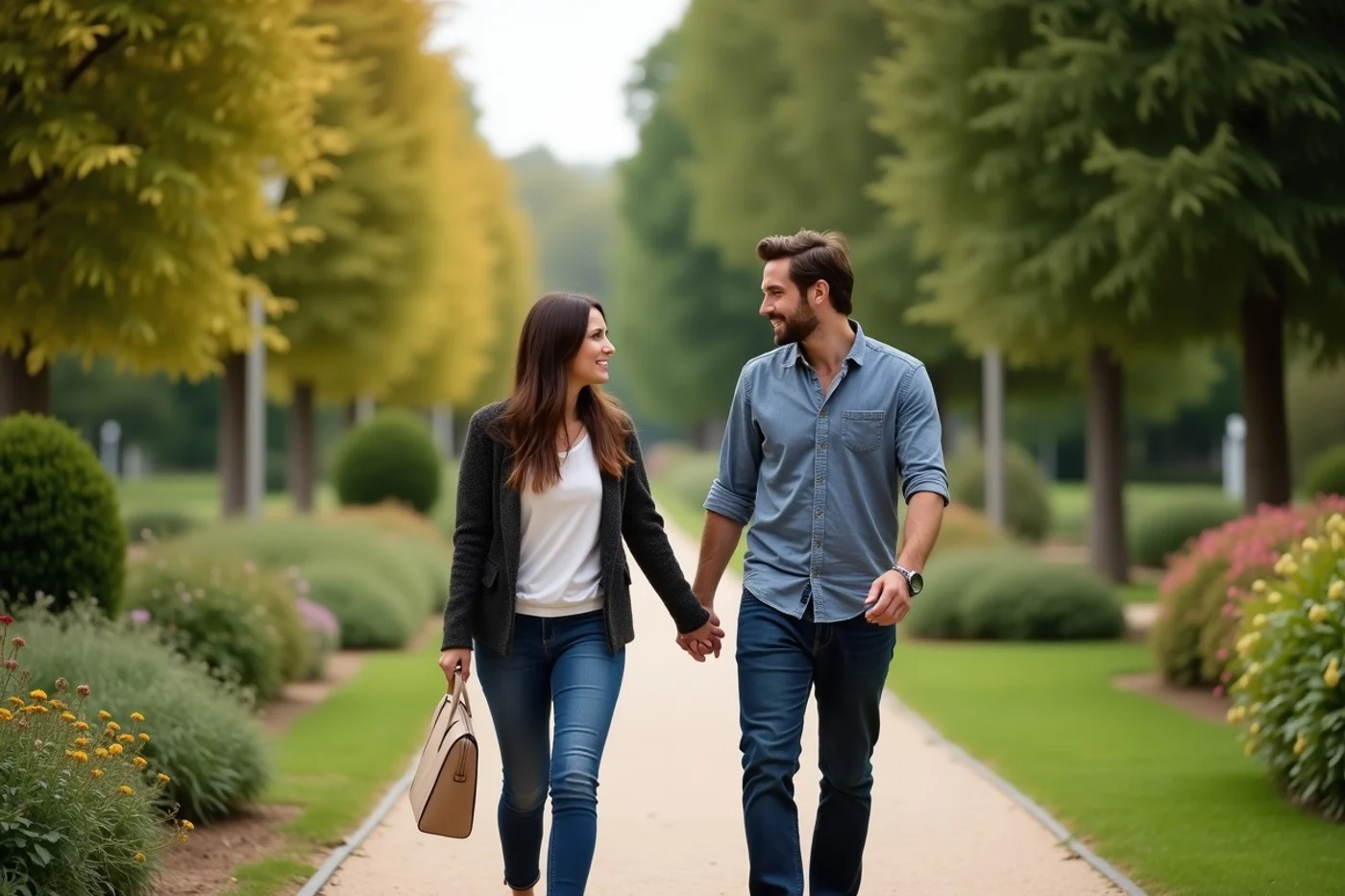
Kortrijk is compact enough that familiar faces and shared routines often matter as much as a first introduction. Meet people through recurring activities, work and commuter networks, or local cultural settings, then keep a first date simple in the centre. A conversation after an arts activity in BUDA, for example, can lead to a short walk near the Broeltorens without turning a first meeting into an all-evening commitment.
How Kortrijk’s local and commuter circles affect dating

Dating in Kortrijk often follows overlapping routines: people who live in the city, people who work there, and people who divide their week with nearby towns. Repeated encounters through work, friends, or regular local plans build familiarity quickly, although availability is not always as predictable as it seems.
When meeting someone new, be open early about the shape of your week. For someone in Kortrijk mainly on workdays, a central plan near Grote Markt fits well; someone local often has more flexibility on a weekday evening. This is scheduling information, not a measure of interest.
Follow-up benefits from being specific about the next window of time. After a good conversation, a message such as, “I enjoyed talking—are you around Kortrijk next Thursday for a coffee?” gives the other person an easy way to say yes, suggest another day, or leave the invitation there. A compact city still has competing diaries; prompt, low-pressure clarity travels well.
Activities that create natural repeat encounters in Kortrijk
Regular activities give conversation a shared subject before dating enters the picture. In Kortrijk, look for a class, club, volunteer role, amateur sport, book discussion, language exchange, or cycling group that meets over a series of weeks. The activity needs to suit your own interests; joining a pottery class solely to locate a partner is a fairly expensive way to acquire unwanted bowls.
BUDA provides an arts setting for a film, performance, workshop, or discussion, according to its programme. Kortrijk Xpo is also worth watching for interest-led gatherings linked to a hobby or field of work. Attend events that interest you in their own right, then let conversations develop from the subject at hand.
Community volunteering has a different rhythm: people cooperate, turn up reliably, and see how others communicate when there is a task to complete. Check local community listings for recurring roles, such as neighbourhood projects, cultural support, or sports activities. Regular contact builds familiarity, but the group’s purpose still comes first.
Making an English-first conversation comfortable in West Flanders
Dutch is the natural starting language for many local conversations in Kortrijk and across West Flanders, while English is often a shared option for people who use it comfortably. Bring it up early and lightly: “I speak English most easily—would you prefer English, Dutch, or a mix?” That gives the other person a genuine choice without turning their answer into a measure of interest or international polish.
A date is not a language exam. People often write fluent English yet feel more expressive in Dutch, or understand English well but need a slower pace in a busy setting. Keep sentences direct, explain an unfamiliar reference when it matters, and say when you have missed something: “I did not catch that—could you say it another way?” The work of being understood belongs to both people, not solely to the person using a second language.
A little Dutch shows attention, but it does not need to carry the conversation. Use words you know naturally, then return to the language in which both of you are curious, funny, and precise. When language switching becomes tiring, naming it is kinder than bluffing: “My Dutch is running out for the evening; shall we continue in English?”
Choosing a first meeting that matches the amount of time available
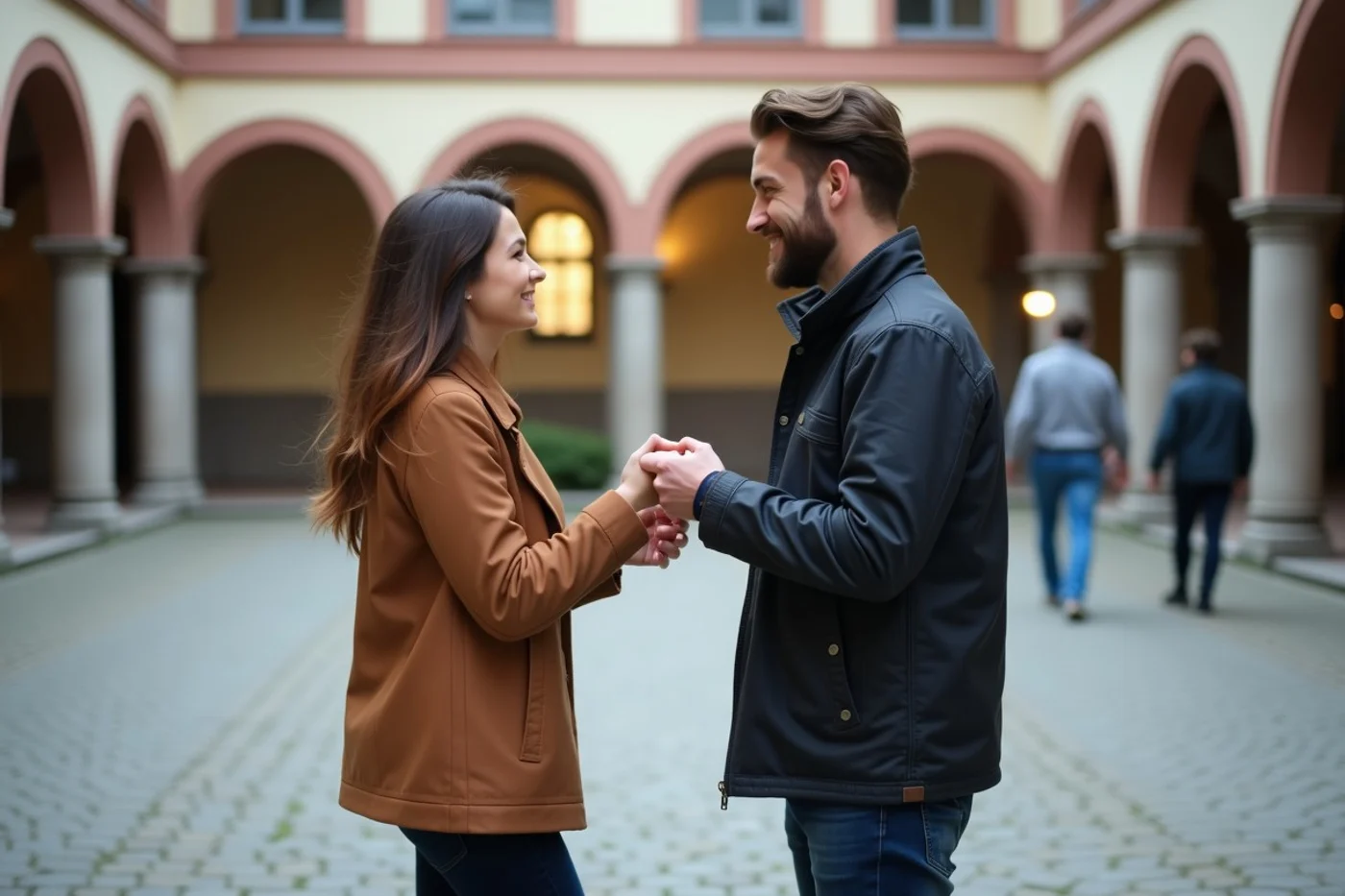
A short meeting in central Kortrijk suits a first encounter when either person has a train, workday, or evening commitment to work around. Meeting near the Grote Markt gives both people an obvious reference point, with time for a coffee or brief walk. Conversation remains the focus, while the plan has a natural finish. Extend it only if the exchange has found its footing.
An activity-led date reduces the pressure of sustained face-to-face talk. A walk around the Broeltorens or through the Begijnhof Kortrijk creates pauses, things to notice, and an easy route home. A film, exhibition, or performance at BUDA suits people who prefer a shared experience, though it leaves less time to talk beforehand.
Save a full meal or longer outing for a meeting where both people have clearly set aside the time. It allows deeper conversation but is harder to shorten gracefully. For a first date, plan a length that still feels pleasant if it ends exactly as planned; an unforced extra hour is more convincing than a three-hour booking endured out of politeness.
A simple way to suggest seeing each other again
- Send a brief message later that day or the next day, while the conversation is still easy to recall. Mention one point you genuinely enjoyed: “I liked hearing your take on contemporary art. I’d be happy to continue that conversation.”
- Turn that reference into one contained invitation. Name an activity, a day range, and a place with a natural end point: “Would you like to see something at BUDA next week and have a drink afterwards?” A specific suggestion gives the other person something clear to accept, decline, or adjust.
- Leave room for a different schedule without turning the invitation into a negotiation. Someone travelling into Kortrijk after work might reply, “This week is difficult, but another time.” A warm answer such as “No problem—let me know when you have an evening free” keeps the tone relaxed.
- Read a noncommittal reply at face value. “Maybe,” “I’m very busy,” or no proposed alternative does not call for repeated follow-ups. One invitation is enough; let their next message show whether they want to make a plan.
What local familiarity should not be mistaken for
In Kortrijk, seeing the same person at a community activity, on a regular commute, or around the city centre creates an easy sense of recognition. It does not establish romantic interest. A friendly greeting, a familiar face, or a mutual acquaintance is simply social context.
Keep later contact tied to a clear invitation and a freely given response. Do not use a shared friend to obtain someone’s number, press them for information, or relay messages after they have not engaged. Recognition also does not make physical affection, personal questions, or an unannounced visit welcome.
This matters most in a compact social scene, where people often cross paths again after a declined invitation. Stay courteous, keep conversations ordinary when you meet again, and let the other person initiate any further contact. Familiarity is pleasant; it is not permission.
Start with one setting where you are likely to see the same people more than once, and give it time. When a conversation feels promising, suggest a specific, low-pressure meeting in central Kortrijk that lets the other person set the pace.
Sources for this guide
- BUDA Kortrijk — official information — BUDA Kortrijk
- Kortrijk Xpo — official information — Kortrijk Xpo
- City of Kortrijk — official information — City of Kortrijk
- UNESCO World Heritage Centre — official information — UNESCO World Heritage Centre